Unboxing a Greener Future: 5 Packaging Trends for 2027
Unboxing a Greener Future: 5 Packaging Trends for 2027
Smarter materials. Less waste. More shelf appeal.
Sustainability is no longer just about using recycled paperboard. As we head into 2027, folding carton packaging is evolving with new materials, innovative coatings, smarter structural designs, and printing technologies that reduce environmental impact without sacrificing visual appeal.
For brands, the challenge is clear: How do you create packaging that's better for the environment while still protecting your product, attracting attention, and standing out on crowded retail shelves?
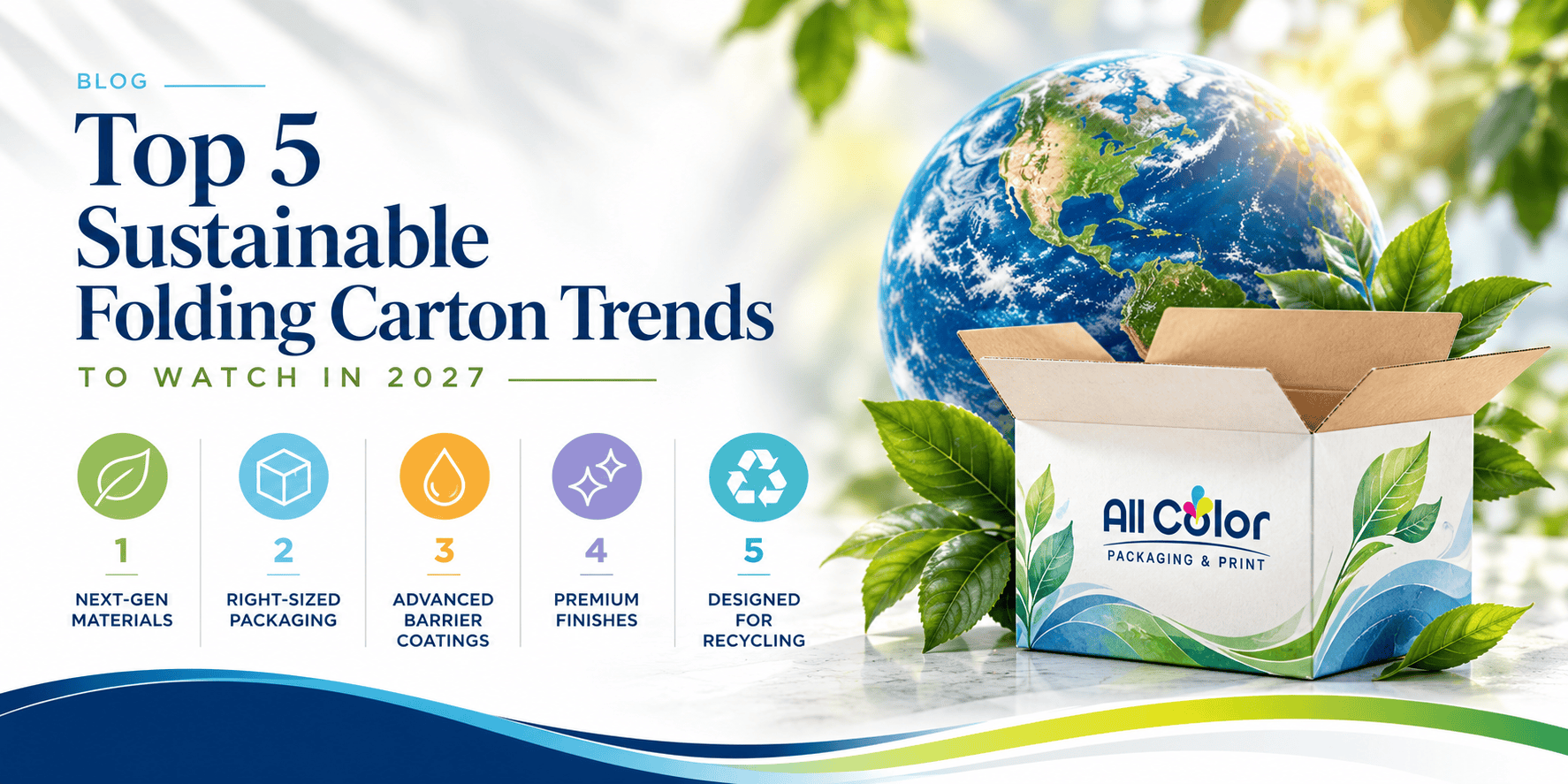
Here are five trends shaping the future of sustainable folding cartons in 2027.
1. Next-Generation Paperboard and Alternative Fibers
Expect more innovation in the materials used to manufacture folding cartons. Beyond traditional recycled and responsibly sourced paperboard, manufacturers are exploring alternative fibers, including agricultural byproducts, bamboo, hemp, and other renewable sources.
These materials offer opportunities to diversify fiber sources and potentially reduce reliance on virgin wood pulp. At the same time, improvements in recycled paperboard quality and surface treatments are helping brands achieve smoother finishes, sharper graphics, and more consistent color reproduction.
What it means for brands: More material choices that can support sustainability goals without compromising the premium look and feel customers expect.
2. Smaller, Lighter Packaging That Works Harder
The move toward right-sized packaging isn't slowing down. In 2027, expect more sophisticated structural engineering that reduces excess paperboard, eliminates unnecessary empty space, and optimizes carton dimensions.
Advances in packaging design are making it possible to use less material while maintaining the strength, durability, and protection products require. Smarter folding configurations and integrated paperboard inserts can also help reduce the need for additional packaging components.
Smaller cartons can offer another advantage: improved shipping and storage efficiency, potentially allowing more products per pallet and reducing transportation costs.
What it means for brands: Less material, less waste, and potentially lower shipping costs, without sacrificing product protection or shelf presence.
3. New Barrier Coatings That Make Paperboard More Versatile
One of the most exciting developments is the advancement of recyclable, fiber-compatible barrier coatings.
Traditionally, certain folding cartons have relied on plastic laminations or specialty coatings to protect against moisture, grease, and other environmental factors. New water-based, bio-based, and mineral-based coating technologies are being developed to deliver similar performance while reducing reliance on conventional plastic layers.
These innovations could expand sustainable paperboard packaging options for food, beauty, wellness, and other products requiring additional protection.
Not every new coating is compatible with every recycling system, so performance and recyclability still need to be evaluated for the intended application.
What it means for brands: Greater opportunities to replace complex packaging structures with fiber-based alternatives while maintaining product integrity and attractive printed graphics.
4. Premium Finishes With a Smaller Environmental Footprint
Sustainable packaging doesn't have to look plain or unfinished. In fact, 2027 will bring continued opportunities to combine eye-catching design with more thoughtful material and finishing choices.
Brands can use high-quality printing, embossing, debossing, selective foil stamping, and carefully chosen coatings to create visual and tactile interest without relying on excessive layers of material.
Advancements in inks, coating technologies, and precision application are also helping manufacturers use decorative effects more efficiently. The key is selecting finishes that deliver maximum visual impact while remaining compatible with the carton’s intended recycling process.
What it means for brands: Packaging that looks and feels premium, communicates quality, and commands attention on the shelf while supporting sustainability objectives.
5. Packaging Designed for Recycling From the Start
In 2027, sustainability will increasingly influence packaging decisions at the earliest stages of design, rather than being considered only after the carton is developed.
Expect greater emphasis on simplifying material combinations, reducing difficult-to-separate components, and choosing inks, adhesives, windows, and coatings with recycling compatibility in mind.
Regulations and retailer sustainability requirements are also encouraging brands to take a closer look at packaging materials and waste. The European Union's Packaging and Packaging Waste Regulation, along with evolving U.S. extended producer responsibility programs, is accelerating interest in packaging that is easier to recover and recycle.
What it means for brands: More thoughtful packaging design that considers the entire lifecycle of the carton, from material selection and manufacturing to disposal and recycling.
The Future Is Sustainable—and Still Beautiful
The biggest takeaway for 2027? Brands shouldn't have to choose between sustainability, performance, and shelf appeal.
With smarter materials, improved coatings, more efficient structural designs, and innovative finishing techniques, folding cartons are becoming an increasingly versatile solution for companies looking to reduce their environmental footprint.
At All Color Printers, we understand that great packaging needs to do more than look good. It needs to protect your product, represent your brand, and perform from production to the retail shelf.
Looking to make your folding cartons more sustainable without compromising their impact? Let's explore packaging solutions that work for your product, your brand, and your sustainability goals.
Packaging That Protects. Print That Performs.